
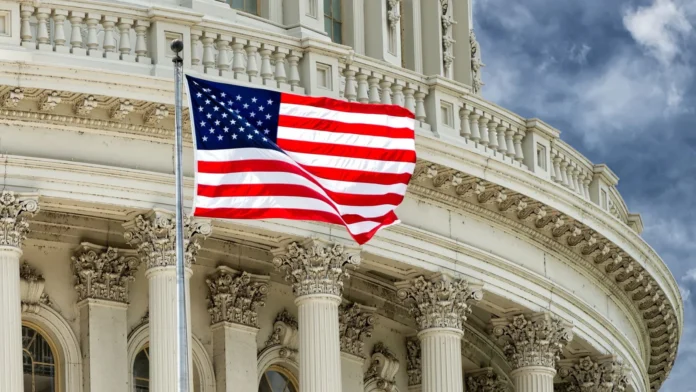
The United States House of Representatives has voted overwhelmingly to extend the African Growth and Opportunity Act (AGOA) for another three years, a move expected to strengthen trade ties between the U.S. and African nations while offering fresh opportunities for Nigerian exporters.
The bill, passed by 340 votes to 54, now heads to the Senate for consideration.
AGOA, first enacted in 2000, provides duty-free access for eligible African countries to export a wide range of goods to the American market. It expired in September 2025, but the new extension, introduced by Representative Jason Smith, would renew the programme until December 31, 2028.
The initiative has long been regarded as a lifeline for African economies, helping them diversify exports beyond crude oil.
A 2024 Brookings report revealed that African countries exported about $103 billion worth of non-crude products to the U.S. between 2001 and 2022. South Africa led with $55.9 billion, while Nigeria ranked second with $11.2 billion, followed by Kenya, Lesotho, and Madagascar.
Nigeria’s Position and Opportunities
For Nigeria, the extension is particularly significant. The country has mostly exported raw or semi-processed goods under AGOA, but renewed access provides a chance to expand into value-added commodities, especially in agriculture.
Analysts say this could spur investment in agro-processing, create jobs in food value chains, and make Nigerian products more competitive in the U.S. market compared to those from non-AGOA countries.
Nigeria was also ranked second in top non-crude imports to the U.S., particularly in natural resources such as light oils and petroleum preparations.
The extension could encourage exporters to move beyond raw materials into processed goods, aligning with Nigeria’s broader push to diversify its economy away from oil dependence.
The renewal of AGOA is widely seen as a stabilising measure for African economies, offering predictability in trade relations with the U.S. For Nigeria, it represents a chance to deepen its non-oil export drive, strengthen its position in global commerce, and attract investment into sectors that have long been underdeveloped.
If Nigerian businesses seize the opportunity to expand into value-added exports, the extension could mark a turning point in the country’s trade strategy, reinforcing its role as a key player in U.S.–Africa economic relations.
Rate, Like 👍, Comment 💬, Share this article, Follow us on our social media handles, and Submit your own story to get featured and earn rewards!