

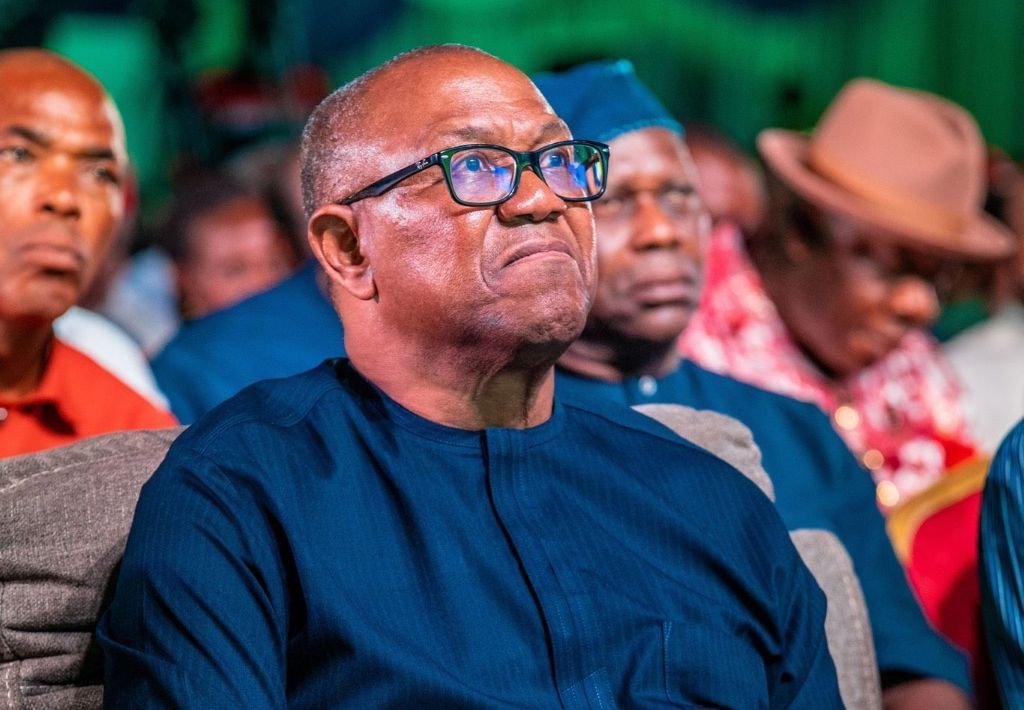
Former presidential candidate Peter Obi has raised alarm over Nigeria’s worsening poverty levels, stating that more than half of the country’s population now lives below the poverty line.
Speaking via his official 𝕏 account on Thursday, Obi lamented that roughly 62% of Nigerians — about 141 million people — are living in poverty, even as politicians remain focused on power struggles.
“As we politicians scramble for positions and vie for control of party structures, often sharing posts even before elections are concluded, a harsh truth confronts our nation,” Obi wrote.
Citing World Bank data, Obi said the number of Nigerians living in poverty surged from 81 million in 2019 to approximately 139 million in 2025.
He noted that between 2023 and 2024, the figure jumped from 115 million to 129 million, an increase of 14 million people in just one year.
Projections for 2026 suggest the number will reach 141 million, meaning an additional 26 million Nigerians will have fallen into poverty between 2023 and 2026.
Obi referenced the Nigeria Economic Outlook 2026 report, titled “Turning Macroeconomic Stability into Sustainable Growth,” which reinforces these grim projections.
Inflation and Household Struggles
Obi warned that weak real income growth and persistently high living costs will continue to exacerbate poverty.
“Most Nigerians will not experience income growth sufficient to counter escalating costs. Although headline inflation may moderate, sustained high prices stemming from energy, logistics, and exchange-rate fluctuations will remain a burden,” he said.
He stressed that low-income households are especially vulnerable, as food constitutes up to 70% of their total spending, leaving them exposed to food inflation and price shocks.
Obi added that the rising tide of poverty weakens purchasing power, diminishes demand, and places immense pressure on micro, small, and medium-sized enterprises reliant on local consumers.
Obi contrasted Nigeria’s trajectory with countries like India and Indonesia, which have made significant progress in reducing poverty.
“India successfully reduced extreme poverty from 35-40% in 2000 to an astonishing 5.3% today. Indonesia, too, has made significant strides, cutting poverty from around 30% in 2000 to roughly 8%, all through unwavering investments in education, health, and social protection,” he said.
By contrast, Nigeria’s poverty rate has risen from about 40% in 2000 to 62% today.
Obi warned that Nigeria cannot continue to tolerate a reality where a child born today faces one of the highest risks of being born into poverty anywhere in the world.
“The fact that 141 million Nigerians are living in poverty is not merely a national failure; it is a blatant threat to our future. The time for complacency has passed. Structural reforms, macroeconomic stability, investment in agriculture, food supply, logistics, education, health, productivity, and large-scale job creation, are no longer optional; they are imperative,” he concluded.
Rate, Like 👍, Comment 💬, Share this article, Follow us on our social media handles, and Submit your own story to get featured and earn rewards!
 WhatsApp Channel
 Telegram Channel