





President Bola Ahmed Tinubu spoke on Monday in Riyadh, Saudi Arabia, urging for an end to the violence and aggression of Israel in Gaza. He complained that the ongoing conflict in Palestine has gone on for far too long and has caused immense suffering to many people.
While addressing the extraordinary session of the Arab-Islamic Summit, which was called to discuss the troubling situation in the Middle East, Mr. Tinubu said he was deeply worried about the humanitarian situation in Gaza.
The summit followed last year’s Riyadh Summit. Leaders and heads of government from the Organization of Islamic Cooperation (OIC) and the League of Arab States are attending.
President Tinubu reiterated Nigeria’s call for an “immediate ceasefire” in Gaza, declaring Nigeria’s support for the “two-state solution.” He explained that this solution is central to the peaceful coexistence with dignity for both Israelis and Palestinians. “The conflict in Palestine has persisted for far too long, inflicting immeasurable suffering on countless lives,” he decried.
Demand To End “Israeli Aggression”
He stressed the collective responsibility of nations that value justice and humanity, urging that they must work together to halt the conflict. “It is not enough to issue empty condemnations. The world must work towards an end to Israeli aggression in Gaza,” he said. He highlighted the need to respect the lives of civilians, arguing that no military strategy should justify the loss of innocent lives.
President Bola Tinubu gives the keynote address at the Joint Arab-Islamic Extraordinary Summit in Saudi Arabia.
— Daddy D.O🇳🇬 (@DOlusegun) November 11, 2024
"It is not enough to issue condemnation, we must work towards amending this aggression in Gaza which has persisted for too long…No political aim, no military… pic.twitter.com/TgPKU658Ee
President Tinubu pointed out that while nations have the right to defend themselves, self-defense must be proportional and adhere to global laws. He reminded everyone, “An entire civilian population, their dreams and futures, cannot be dismissed as collateral.” He then explained Nigeria’s principled support for a two-state solution, which he described as “a beacon of hope” for both groups to achieve self-determination and peace.
“This vision requires a commitment to dialogue and respect for history,” he said, reminding everyone that the roots of this conflict go back much further than recent events. He noted the urgency of finding “new pathways to peace, without delay,” as the images of violence affect people globally.
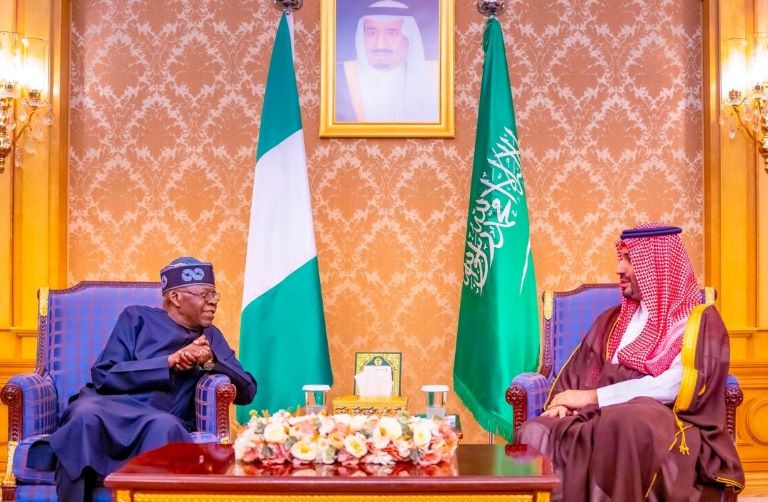
He acknowledged that even though reconciliation is challenging, honest conversations can lead to better understanding. He emphasized that the international community must think about new solutions for this ongoing conflict, stating, “We must engage in this dialogue with sincerity and resolve, recognizing the complexities that each side faces.”
Host Appreciated
Tinubu thanked King Salman and Crown Prince Mohammed bin Salman of Saudi Arabia for organizing the summit, calling it an important chance to rejuvenate diplomatic efforts toward sustainable peace. With its own experiences, Nigeria will continue to support international efforts for peace and stability in the Middle East. He stated, “Identity politics are no substitute for respecting the nuances of diversity.”
Furthermore, President Tinubu proposed establishing a secretariat to ensure the implementation of the summit resolutions. He encouraged leaders to appoint select heads of government to gather global support and oversee the implementation of these resolutions. He requested regular updates to the OIC and Arab League leaders until enduring peace in the Middle East is achieved.
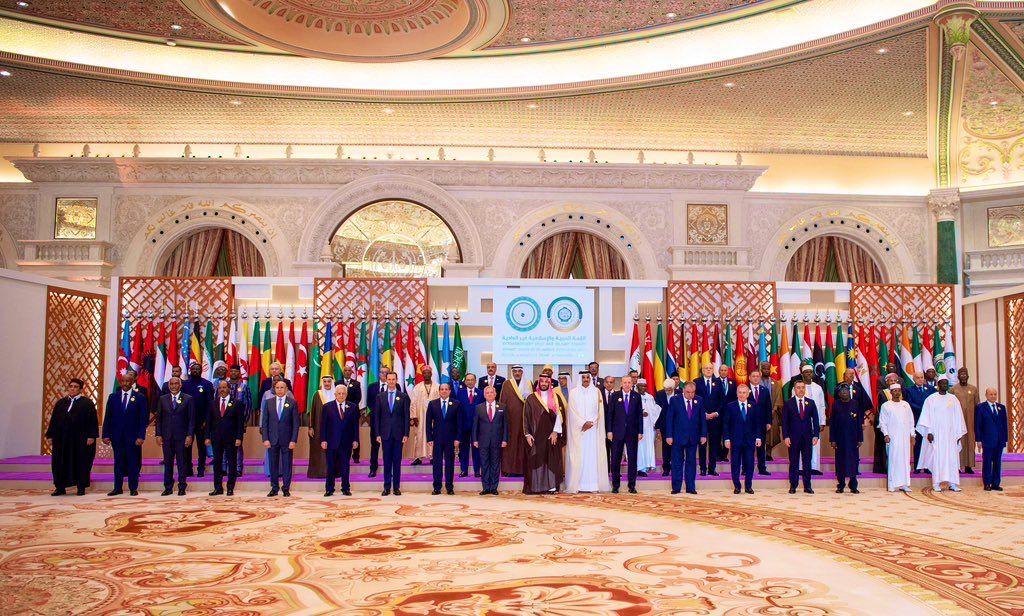
In his opening remarks at the summit, Crown Prince Mohammed bin Salman condemned the actions of Israel in Gaza and Lebanon, criticizing the targeting of civilians and violations of sacred sites. He also condemned the blockade preventing humanitarian aid from reaching those in need and emphasized the importance of Lebanon’s sovereignty and territorial integrity.
Tinubu’s stance on the Israeli-Palestinian conflict may not go down well with Nigeria’s Christian bloc, most of which view the situation in Palestine differently. Nigeria is a secular state roughly divided between adherents of both Christianity and Islam. Its leaders have often needed to walk a fine balancing line in handling international issues of religious connotations. Even the membership of the OIC bloc is still strongly disputed in Nigeria.
Comment, Like 👍, share this article, and Follow us on our social media handles.

 WhatsApp Channel
 Telegram Channel