

Nigeria’s 2027 general elections are now under direct scrutiny from Washington, as US Congressman Riley Moore says future security and financial support will be closely linked to religious freedom and how the polls are conducted.
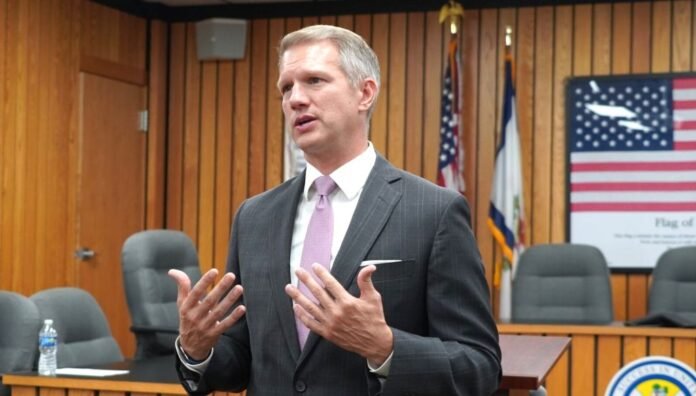
Moore, a Republican representing West Virginia, disclosed this in an interview with US-based channel NoireTV, where he discussed Nigeria’s next national vote and the growing concern in Washington over violence and persecution of Christians.
Responding to questions on Nigeria’s elections, he said the conduct of the polls had become a priority for the United States government and for lawmakers working on new conditions for cooperation with Abuja.
“What I’d say is that we’re certainly going to be watching these results and how these elections unfold and how they’re executed. And that’s something that myself and the administration are going to be paying very close attention to,” he stated, signalling that everything from voting day to result announcement will be under watch.
Moore revealed that the US House of Representatives was considering an appropriations bill with “strong and aggressive language” on Nigeria, linking assistance to how the country handles religious freedom and security.
“We’re working on Chris Smith’s bill, which obviously I’m a co-sponsor. But I’d say, more importantly, is the appropriations bill that we’re going to have on the floor,” he said, referring to fellow Republican Chris Smith, a long-time voice on African human rights and religious persecution.
According to him, the bill contains provisions on “the persecution of Christians and restrictions on security assistance to the government of Nigeria, and steps they have to take,” setting out concrete conditions for future support.
He added, “That bill’s likely to become law. We’re about to, hopefully, pass that. And so there’s some pretty strong and aggressive language in that bill that’s going to be binding as it relates to our relationship to Nigeria moving forward.”
Washington’s New Conditions On Nigeria
The emerging framework means that, as Nigeria heads toward the 2027 polls, US cooperation may depend on how Abuja responds to repeated reports of church attacks, faith-based killings and weak accountability for violence in parts of the country.
By linking security assistance to religious freedom, lawmakers are pushing Nigeria’s authorities to show clearer action against groups that target Christians and other minorities, and to prove that police and military units are protecting innocent communities.
At the same time, making election conduct a central test reflects concern that flawed polls can deepen tensions, undermine trust in government and leave vulnerable groups even more exposed.
For a country often described as Africa’s largest democracy, the message is that credible elections and real protection for religious communities will now shape parts of the relationship with Washington.
Moore’s Direct Ties To Trump Team
Moore said he remained in direct engagement with the Trump administration on Nigeria and intended to raise these issues again at a planned dinner with the president.
“I continue to work with the administration on next steps that we’re going to take. I’m actually going to see President Trump tonight,” he said, explaining that he would discuss Nigeria during a private meeting.
“I’ll be having dinner with him and some other members, so yeah, I continue to talk to him about these issues, and it’s very important to him,” Moore added, suggesting that Nigeria’s elections and religious freedom situation are firmly on the White House agenda.
For Nigeria’s leaders, parties and security agencies, these signals from Washington add international pressure ahead of 2027, with the possibility that future support will depend on what happens in churches, communities and polling units across the country.