


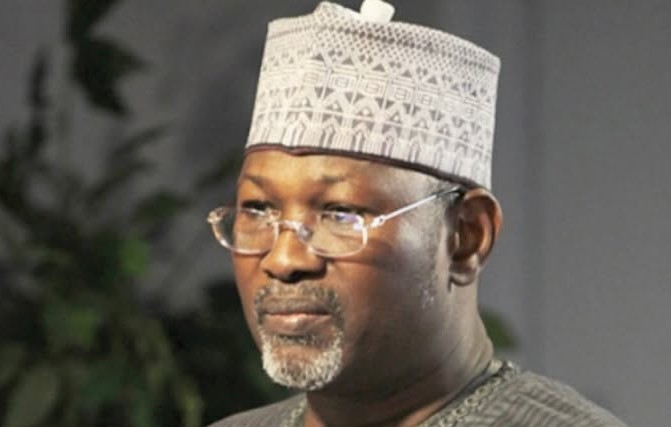
Nigeria’s new electoral law carries serious flaws that could be exploited to manipulate the 2027 general elections — and the window to fix them is closing fast.
That was the clear message from former Independent National Electoral Commission (INEC) Chairman, Professor Attahiru Jega, on Wednesday, June 25, 2026, in Abuja.
Jega delivered his concerns in a paper titled “Some Reflections on the 2026 Electoral Act and Nigeria’s Electoral Democracy” at the public presentation of a collection of essays authored by policy expert Professor Ladi Hamalai.
A former INEC chair who served from 2010 to 2015 and presided over two general elections widely praised for their credibility, Jega carries particular weight when he speaks on electoral integrity.
He acknowledged that the 2026 Electoral Act contains genuine improvements over its predecessor, particularly its mandate for electronic transmission of election results.
However, he said it also contains provisions of “serious concern” that require immediate attention.
Three Clauses Jega Wants Fixed Before January 2027
The first is Section 60(3), which governs electronic result transmission. Jega was alarmed that the clause designates Form EC8A — the physical result sheet — as the primary collation document if electronic transmission fails.
“Given what we know about the Nigerian environment and the desperation of the ‘do-or-die’ politicians, there shouldn’t be such a vague provision, which would be used to truncate electronic transmission, in favour of manual transmission of results, which is easier to fraudulently manipulate and exploit,” he said.
He also warned against over-reliance on the IReV portal — INEC’s public result-viewing platform — in the event of transmission failure.
“IReV transmitted data is for public ‘viewing’ purposes only. The data to be relied upon in result declaration should be the backend result compilation database, which ideally is more secure, not publicly accessible, and less susceptible to fraudulent intrusion,” he said.
The second provision he targeted is Section 83(5), which bars courts from entertaining any suit on the internal affairs of a political party.
Jega described it as a sweeping overreach that could shield party conduct that directly violates constitutional rights and the rule of law.
The third is Section 138(1), which removes qualification as a valid ground for post-election challenge.
He called this constitutionally dubious, given that Section 131 of the 1999 Constitution explicitly sets educational qualification requirements for elective office.
“There does not seem to be any rational justification for removing it; unless, of course, if some certificate fraudsters and qualification racketeers would like to have an unrestricted field day,” he said.
Time Is Running Out — and Courts Are Also Under Scrutiny
Jega called for urgent amendments “within the AU/ECOWAS protocols, which require all amendments to and reviews of the electoral legal framework to be completed at least six months to the general elections.”
That deadline is already effectively here. As of Friday, June 27, 2026, the presidential and National Assembly elections are set for January 16, 2027 — six months and one week away.
Governorship and State Assembly elections follow on February 6, 2027.
Beyond the Act itself, Jega extended his critique to the judiciary, warning that willful acts by what he called "reckless judges“ constituting “judicial rascality” were undermining electoral integrity — and called on the National Judicial Council (NJC) to act decisively.
He also called for longer-term structural changes after 2027 — including removing the president’s power to appoint the INEC chairman, “unbundling” INEC to focus solely on conducting elections, and reducing campaign finance limits he described as excessively high.
On presidential campaigns alone, the current cap stands at ₦10 billion — a figure Jega said actively encourages the monetisation of politics.
“All hands need to be firmly on deck, to ensure a conducive environment for the preparation and conduct of the 2027 general elections with integrity,” he concluded.
Follow JolibaLive News for live coverage of Nigeria’s electoral law debate and all 2027 election developments.

 WhatsApp Channel
 Telegram Channel




Jega is right. This electoral act is fraudulent. I hope they amend it before it is too late.