


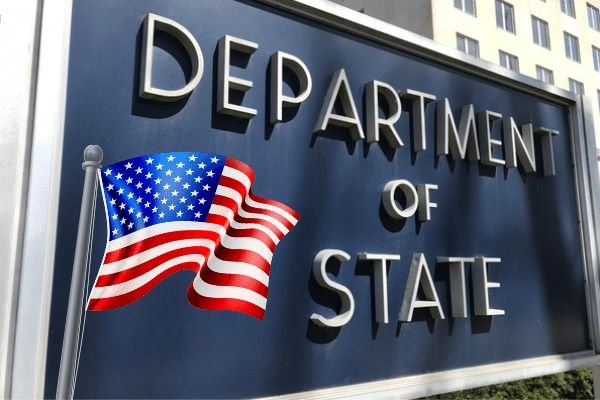
The United States Department of State has authorized non‑emergency staff and family members to depart the U.S. Embassy in Abuja, citing a deteriorating security situation across Nigeria.
The directive, issued in an updated travel advisory on April 8, 2026, reflects increasing worries over crime, terrorism, kidnapping, and civil unrest in the country.
“On April 8, 2026, the Department of State authorized non‑emergency U.S. government employees and U.S. government employee family members to leave U.S. Embassy Abuja due to the deteriorating security situation,” the advisory stated.
The department classified Nigeria under Level 3: Reconsider Travel, while expanding the list of Level 4: Do Not Travel states to 23.
Newly added states include Plateau, Jigawa, Kwara, Niger, and Taraba, joining others such as Borno, Yobe, Kaduna, Kano, Katsina, Sokoto, Zamfara, Abia, Anambra, Bayelsa, Delta, Enugu, Imo, and Rivers (excluding Port Harcourt).
“Reconsider travel to Nigeria due to crime, terrorism, unrest, kidnapping, and inconsistent availability of health care services. Some areas have increased risk,” the advisory added.
The department warned that violent crimes, including armed robbery, carjacking, and kidnapping for ransom, are widespread.
It warned that U.S. citizens are often perceived as wealthy and, therefore, frequent targets.
“The security situation in these states is unstable and uncertain due to civil unrest. Widespread violence between communities and armed crime, including kidnapping and roadside banditry,” the advisory explained.
Risks And Guidance For Travelers
The advisory highlighted terrorism threats across the country, with potential attacks at markets, shopping centers, hotels, places of worship, and public gatherings.
It also flagged health services as limited and inconsistent, with facilities generally below U.S. and European standards.
In Southern Nigeria, including Abia, Anambra, Bayelsa, Delta, Enugu, Imo, and Rivers, the department warned of widespread crime, violent protests, and armed gangs.
“Crime is widespread in Southern Nigeria. There is a high risk of kidnapping, violent protests, and armed gangs,” the advisory added.
To mitigate risks, U.S. citizens are advised to enrol in the Smart Traveller Enrollment Program (STEP) for updates, avoid demonstrations and large gatherings, exercise caution while travelling, and establish personal safety and “proof of life” protocols.
The advisory underscores the seriousness of Nigeria’s security problems, which have worsened in recent months, now involving wider communal clashes and banditry.
Rate, Like 👍, Comment 💬, Share this article, Follow us on our social media handles, and Submit your own story to get featured and earn rewards!
 WhatsApp Channel
 Telegram Channel