

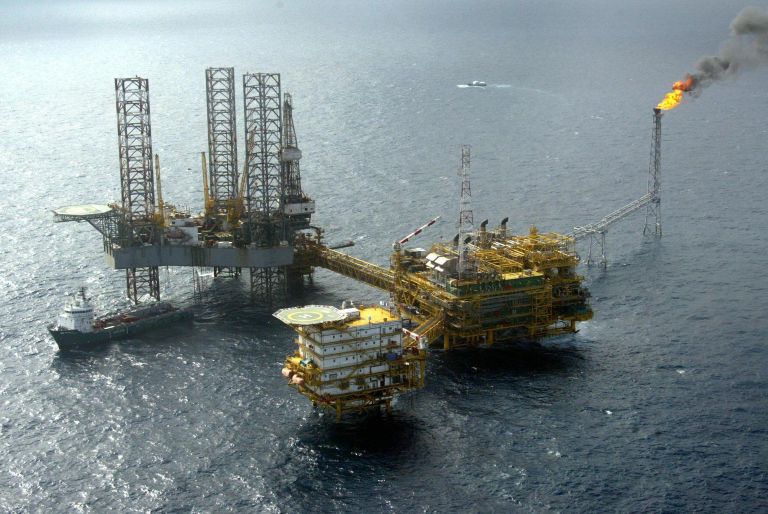
Nigeria’s oil reserves dipped slightly in 2026, while gas resources expanded, signalling a shift in the country’s energy balance.
The figures were released in Abuja by the Nigerian Upstream Petroleum Regulatory Commission.
The commission confirmed that total oil and condensate reserves stood at 37.01 billion barrels as of January 1, 2026.
Meanwhile, total gas reserves rose to 215.19 trillion cubic feet, reflecting continued discoveries and improved data.
“The Nigerian Upstream Petroleum Regulatory Commission is committed to improving upstream sector performance,” said Oritsemeyiwa Eyesan.
“We are enhancing reserves growth and ensuring stable production through the Petroleum Industry Act, 2021.”
The data showed a slight drop from 2025 levels, when oil reserves stood at about 37.3 billion barrels.
However, gas reserves increased from roughly 210–211 trillion cubic feet within the same period.
Oil Declines Slightly As Gas Reserves Expand
The commission attributed the oil decline to sustained production and technical reviews across oil fields.
“2P crude oil and condensate reserves stand at 31.09 billion barrels and 5.92 billion barrels,” Eyesan said.
“This amounts to a total of 37.01 billion barrels.”
On gas, the breakdown showed strong gains across both associated and non-associated reserves.
“2P associated gas and non-associated gas reserves stand at 100.21 and 114.98 trillion cubic feet,” she said.
“This results in total gas reserves of 215.19 trillion cubic feet.”
Furthermore, the reserves life index stood at 59 years for oil and 85 years for gas.
This index estimates how long resources will last at current production levels.
“The reason for the slight change in oil reserves by 0.74 per cent is attributable to production in 2025,” she said.
“It also reflects reserves updates based on field performance and subsurface studies.”
Gas Gains Linked To Discoveries And Policy Shift
In contrast, gas reserves grew due to discoveries and stronger technical evaluations.
“The increase in associated and non-associated gas reserves by 2.21 per cent is driven by discoveries,” Eyesan said.
“It also reflects the result of robust reservoir studies.”
She formally declared the figures as Nigeria’s official petroleum reserves position.
“I hereby declare total oil reserves of 37.01 billion barrels and gas reserves of 215.19 trillion cubic feet,” she said.
The trend aligns with Nigeria’s “Decade of Gas” strategy to expand gas production and use cleaner fuels.
According to Reuters, the policy seeks to attract investment into gas infrastructure and exports.
The Petroleum Industry Act 2021 has also reshaped regulation and investment flows.
It introduced new frameworks for licensing, transparency, and data management in the upstream sector.
Despite the dip, Nigeria remains among Africa’s top oil reserve holders with over 37 billion barrels.
Meanwhile, its rising gas reserves reinforce its position as a major global gas resource nation.
As energy markets evolve, Nigeria appears to be tilting gradually toward gas as a strategic resource.
Rate, Like 👍, Comment 💬, Share this article, Follow us on our social media handles, and Submit your own story to get featured and earn rewards!
 WhatsApp Channel
 Telegram Channel