

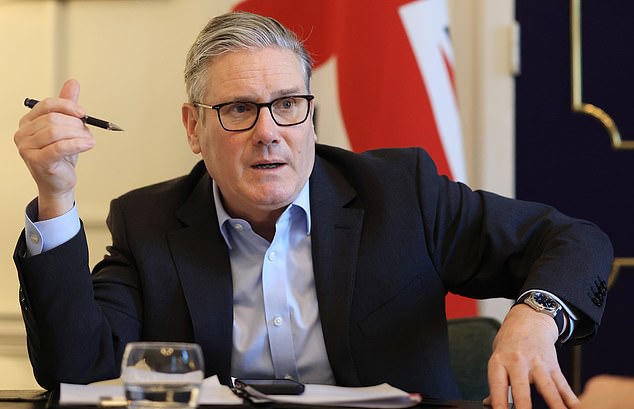
In a major change of British position on the war in the Gulf, Prime Minister Keir Starmer has officially authorized the United States to utilize UK military bases for offensive strikes against Iranian targets.
The decision, announced late Friday, March 20, 2026, aims to break the Iranian blockade of the Strait of Hormuz, a move that has already sparked fierce condemnation from both domestic rivals and international adversaries.
The authorization covers the use of RAF Fairford in Gloucestershire and the strategically vital Diego Garcia in the Indian Ocean.
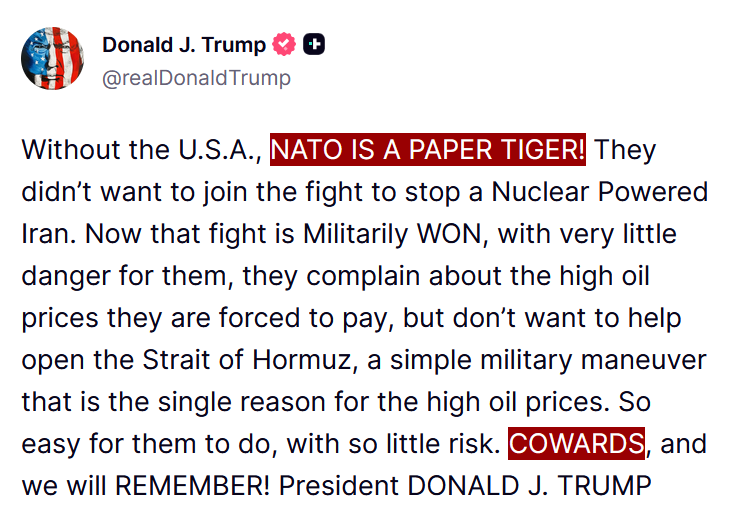
This pivot follows weeks of “dither and delay,” according to critics, and comes just hours after U.S. President Donald Trump launched a scathing social media tirade labeling NATO allies as “cowards” for their perceived inaction.
Previously, Downing Street had restricted the U.S. to “defensive-only” operations—specifically targeting missile sites that posed a direct threat to British assets.
However, as global energy markets teeter on the edge of collapse, the mandate has been expanded to “degrading the capabilities” of Iranian forces blocking the world’s most critical oil artery.
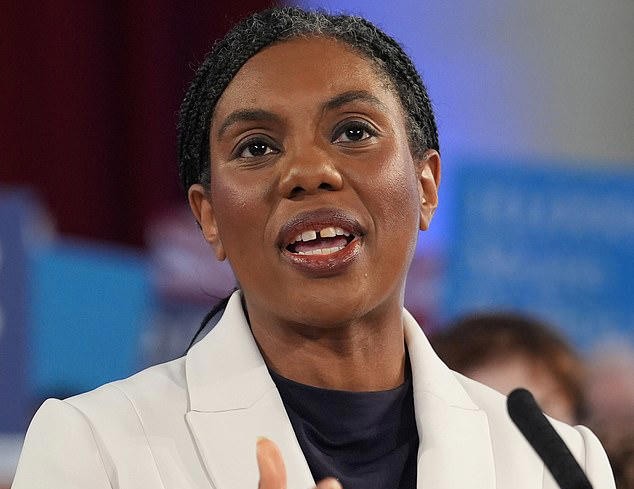
Conservative Leader Kemi Badenoch was quick to capitalize on the shift, branding it the “mother of all U-turns.“.
“After weeks of dither and finger-pointing, the Prime Minister has again changed his mind and performed another screeching U-turn,” added Shadow Defence Secretary James Cartlidge.
“He had the Navy’s only active minesweeper taken out of the Gulf a week before the war began. Now, he is dragging us into a conflict he promised to avoid.”
On the other side of the aisle, veteran MP Jeremy Corbyn warned that the move is a “reckless act of escalation” that bypasses parliamentary oversight. “How on earth can the Prime Minister still pretend we are not involved?” Corbyn asked.
Trump’s “Paper Tiger” Rhetoric
The policy shift follows a series of aggressive posts from President Trump on Truth Social.
The President dismissed NATO as a “paper tiger” without American backing and warned that the U.S. would “REMEMBER” those who refused to join the fight.
“Now that fight is Militarily WON… they complain about the high oil prices they are forced to pay but don’t want to help open the Strait of Hormuz,” Trump wrote.
Outside the White House, he added that while the UK-US relationship remains strong, London “should have acted a lot faster.“
The President’s frustration coincides with a massive U.S. military buildup.
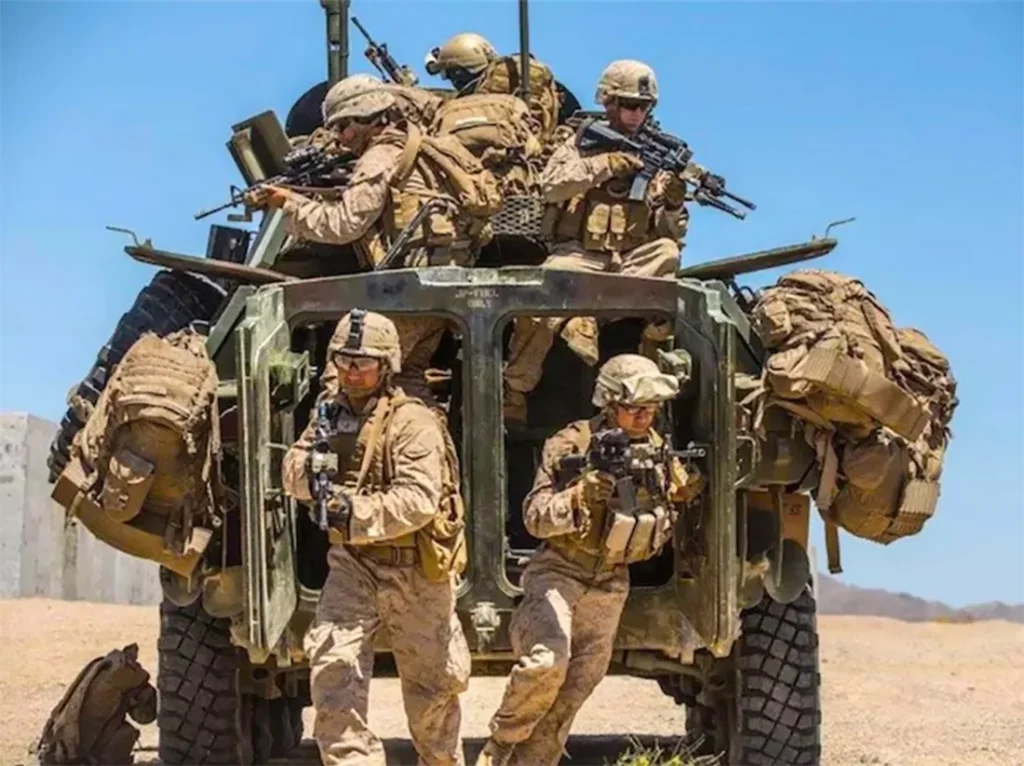
Approximately 2,500 U.S. Marines are currently arriving in the region, with reports suggesting the administration is mulling a high-stakes invasion of Kharg Island. Known as Iran’s “crown jewel,” the island processes roughly 90% of the regime’s crude exports.
Washington’s strategy appears to be a “seize and negotiate” tactic—capturing the island to force the new Supreme Leader, Mojtaba Khamenei, to the table.
Energy Markets and Regional Chaos
The economic fallout of the blockade is already staggering. Iraq has declared force majeure on its oilfields, with southern crude output plunging from 3.3 million barrels per day to just 900,000.
Oil prices have surged 40–50% in the last three weeks, and analysts warn of a “doomsday scenario” if the infrastructure damage becomes permanent.
The conflict reached a new level of tension on Friday when Iranian drones successfully struck a Kuwaiti oil refinery. This followed the reported death of IRGC spokesman General Ali Mohammad Naeini in a missile strike.
In response, the IRGC issued a defiant warning: “The soldiers of Islam are eagerly awaiting the American marines. They are fully prepared to deliver a hard slap to the American warship deep in the theatre of war.”
This escalation signals the end of Britain’s “cautious observer” phase and cements its role as a primary combatant in the unfolding Middle East war.
For global consumers, the reopening of the Strait of Hormuz is the only path to stabilizing fuel prices; however, the cost of doing so may be a prolonged, multi-front war involving major global powers and the potential for a total energy infrastructure collapse in the Gulf.
Rate, Like 👍, Comment 💬, Share this article, Follow us on our social media handles, and Submit your own story to get featured and earn rewards!