



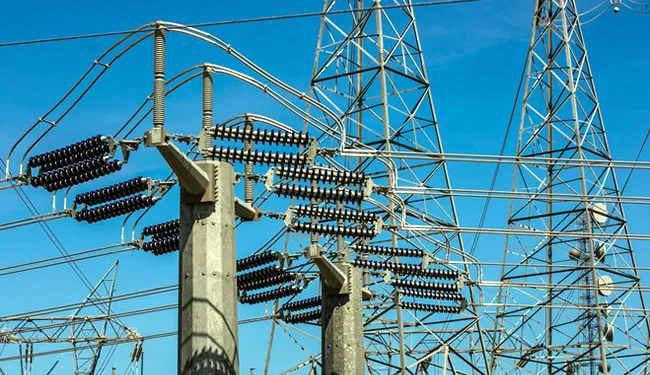
Nigeria is negotiating a $2 billion loan from China’s Export‑Import Bank to build a new “super grid” that will cut the country’s chronic power shortages and help industries grow.
Power Minister Adebayo Adelabu said the plan was disclosed at an economic summit in Abuja on Monday.
The super grid will link the eastern and western parts of the country, where most big factories and industrial users are based.
He said the goal is to “decentralize power generation in Nigeria and get the heavy commercial users that left the power grid because of its unreliability to return.”
Nigeria’s power system remains weak. The country has about 13 gigawatts of installed generation capacity, but the grid delivers only about a third of that to more than 200 million people.

Grid collapses are common, and frequent outages have pushed many firms to rely on self‑generation, which now supplies nearly half of Nigeria’s electricity.
By comparison, South Africa, with roughly a quarter of Nigeria’s population, has about 70 gigawatts of installed capacity.
The new super grid is meant to improve transmission efficiency and get more power to industrial areas. Adelabu said the Federal Executive Council has approved financing for the project.
It also fits into President Bola Tinubu’s economic agenda, which includes scrapping fuel subsidies, changing tax laws, boosting oil output in the Niger Delta, and strengthening the power sector’s finances.
Recent tariff hikes for urban consumers raised power‑sector revenues by 70% in 2024 and are expected to rise another 41% to ₦2.4 trillion ($1.6 billion) this year. Yet Nigeria’s grid still collapses regularly.
The Nigerian Electricity Regulatory Commission (NERC) recorded several partial or full collapses in 2024, including a major blackout in March and another in early September that darkened large parts of the country for hours.
Rate, Like 👍, Comment 💬, Share this article, Follow us on our social media handles, and Submit your own story to get featured and earn rewards!
 WhatsApp Channel
 Telegram Channel





The power system became weak and unable to reach out to people