

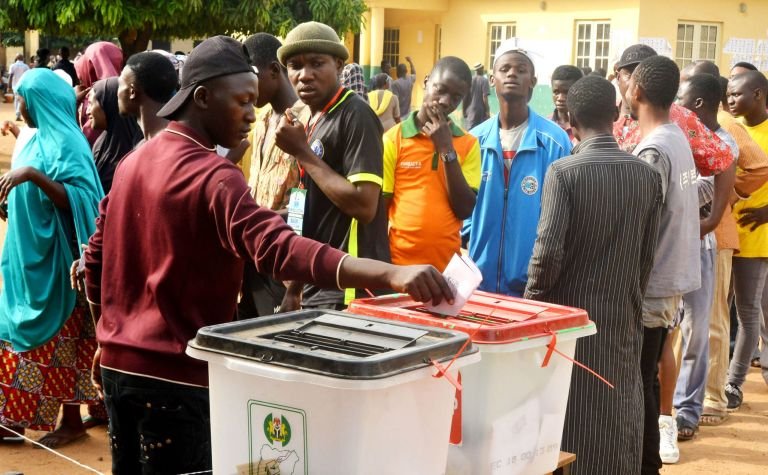
On Saturday, February 21, 2026, Nigeria’s Federal Capital Territory (FCT), Abuja, held elections across its six Area Councils—Abaji, Abuja Municipal Area Council (AMAC), Bwari, Gwagwalada, Kuje, and Kwali.
Though technically local government elections, these contests carry disproportionate weight because Abuja has no governor or state assembly. Under the Nigerian constitution, the territory is administered directly by the President, who often appoints a Minister for the FCT to act on his behalf.
The National Assembly serves as its legislative arm.
The elected chairmen of the Area Councils are the highest-ranking local officials in the capital, making these elections uniquely significant compared to Local Government Area (LGA) elections in other states of Nigeria.
This report provides a comprehensive analysis of the elections, including historical context, campaigns, election-day events, results, complaints and praises, and implications for Nigeria’s democracy and the 2027 general elections.
Historical Background: The Creation of the FCT and Its Area Councils
The Federal Capital Territory was created in 1976 by the military government of General Murtala Mohammed, carved from parts of Niger, Kogi, and Nasarawa States. The decision was driven by the need for a neutral capital, free from ethnic dominance, modeled after Washington D.C. in the United States.
Before then, Lagos State in South West Nigeria served as the seat of colonial and post-colonial governments from the amalgamation in 1914 to 1976.
To ensure grassroots governance in the FCT, six Area Councils were established:
- Abaji – predominantly rural, with strong traditional institutions.
- AMAC (Abuja Municipal Area Council) – the most urbanized, housing government institutions and diplomatic missions.
- Bwari – home to educational institutions like the Nigerian Law School.
- Gwagwalada – a rapidly growing urban hub.
- Kuje – semi-urban, with expanding residential estates.
- Kwali – largely agrarian, with cultural significance.
Since the return to democracy in 1999, FCT Area Council elections have been conducted every three years. State and federal contests have often overshadowed them because, since they have no governor, LGA chairmen are uniquely important as they are the highest elected executive officials in the capital.
Campaigns and Political Climate
The 2026 elections featured candidates from 17 political parties, but the main contest was between the All Progressives Congress (APC), the People’s Democratic Party (PDP), and the African Democratic Congress (ADC).
- APC fielded strong incumbents and new aspirants, leveraging federal influence.
- PDP sought to reclaim lost ground, emphasizing grassroots mobilization.
- Smaller parties like the All Progressives Grand Alliance (APGA), Social Democratic Party (SDP) and the Labour Party (LP) are seen as merely “also rans“.
Notable candidates included:
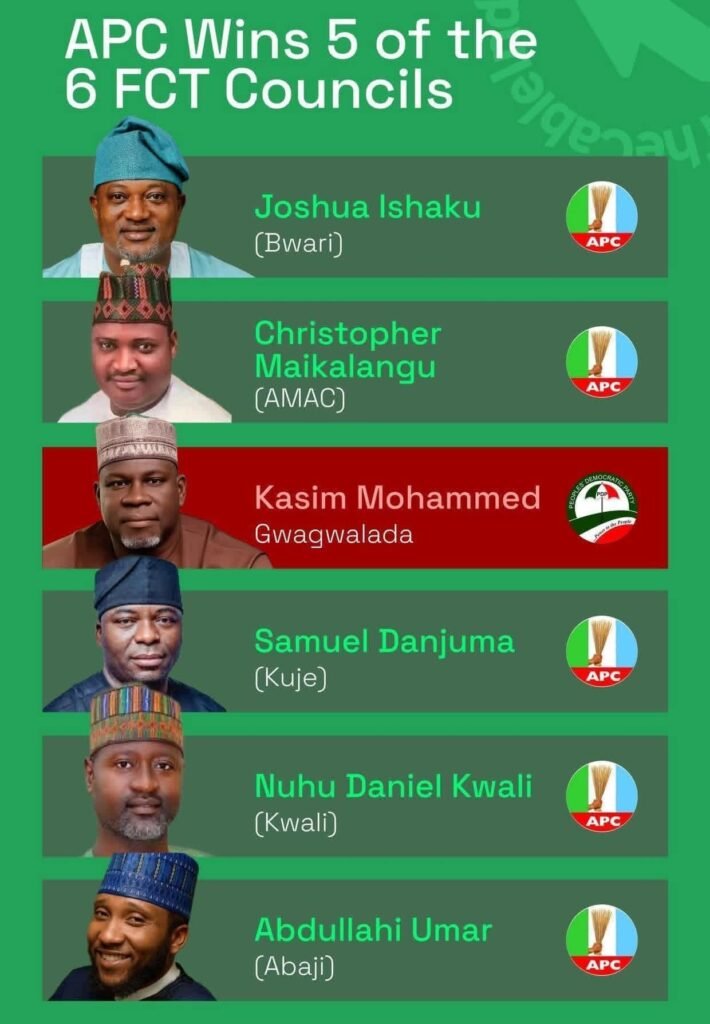
- Christopher Maikalangu (APC) – winner in AMAC.
- Umar Abdullahi Abubakar (APC) – victorious in Abaji.
- Mohammed Kasim (PDP) – upset victory in Gwagwalada.
- Dr. Moses Paul (ADC). Won his polling unit in Abacha Estate, Wuse Zone 4, Abuja, but not enough to win the LGA election.

Campaigns focused on infrastructure, security, and youth employment. APC candidates emphasized alignment with the federal government, while PDP candidates promised grassroots empowerment.
One APC slogan captured the mood: “Vote APC, vote progress in the capital of Africa’s giant.”
Civil society groups noted that campaign financing was heavily skewed in favor of APC, reflecting its incumbency advantage.
Election Day Events
Voting commenced across 1,401 polling units in AMAC and hundreds more across other councils.
INEC deployed the Bimodal Voter Accreditation System (BVAS) and uploaded results to the IReV portal in real time.
The IRev innovation was supposed to add transparency to the process, but late arrival of materials in several rural councils and malfunctioning BVAS in some units helped mar the event in the eyes of several observers.
According to another online platform, TheCable, “As of 6:28 pm, 809 results out of 1,401, representing 57.74 percent from AMAC, had been uploaded on IReV.”TheCable
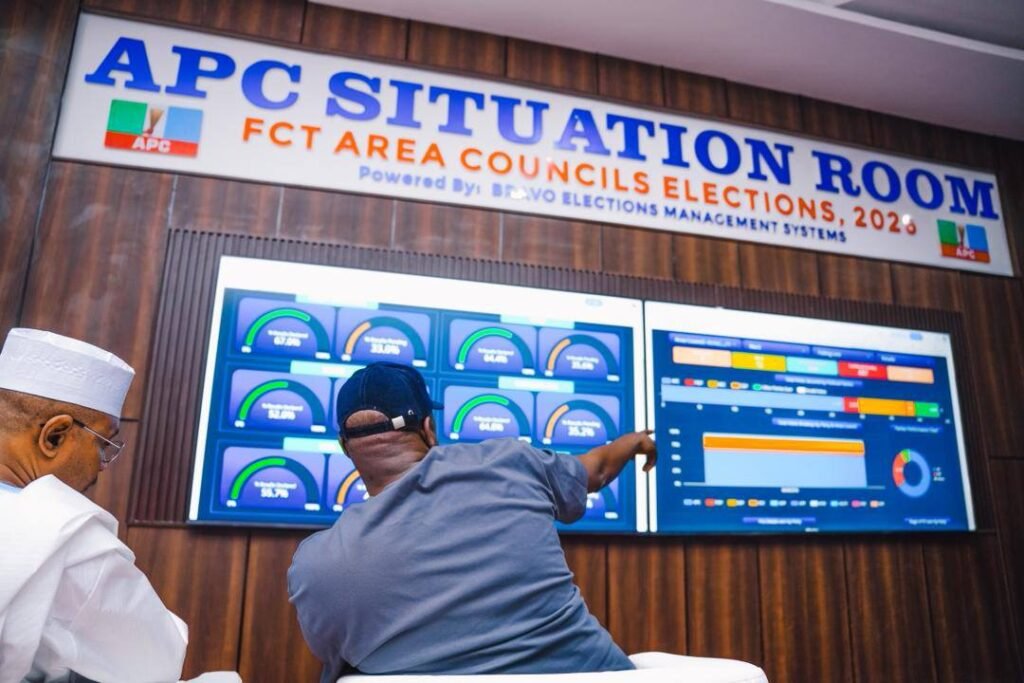
Turnout was mixed: higher in rural councils like Abaji and Kwali, lower in urban centers like Bwari and Dawaki.
A voter in Dawaki told Premium Times: “This is voter apathy because the leaders are not doing the right thing. Voters already presume the election has been rigged.”Premium Times.
Just a day to election, on Friday, February 20, 2026, the Minister of the FCT suddenly problamed a 22 hour curfew, outlawing free movement from 8.00pm Friday evening to 6.00pm of election day on Saturday.
When rights advocates cried foul, the Minister dug in insisting the proclamation was on the “approval of the President” and was done to forestall break down of law and order and any manipulation of the process.
Security presence was heavy, with police and civil defense corps deployed. No major violence was reported, though isolated skirmishes occurred in Gwagwalada.
Many believe the heavy presence of fully armed security operatives and the declaration of a curfew provided an atmosopher of siege that could have led to voter apathy.
Results and Winners
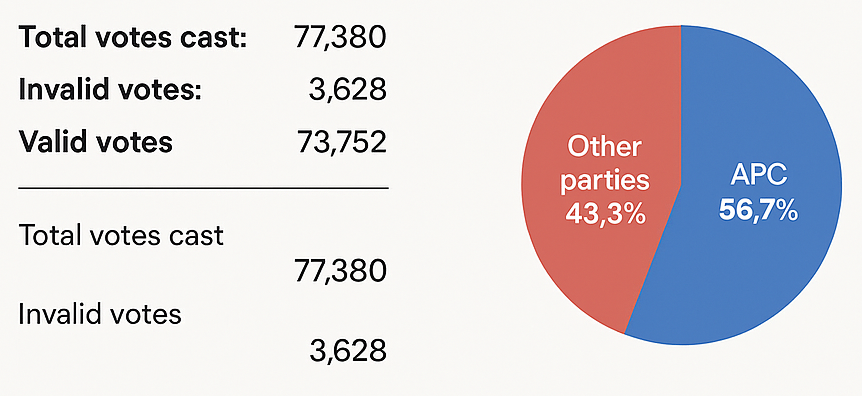
According to INEC’s official declaration, the APC won a landslide, securing victory in all six LGA’s but one.
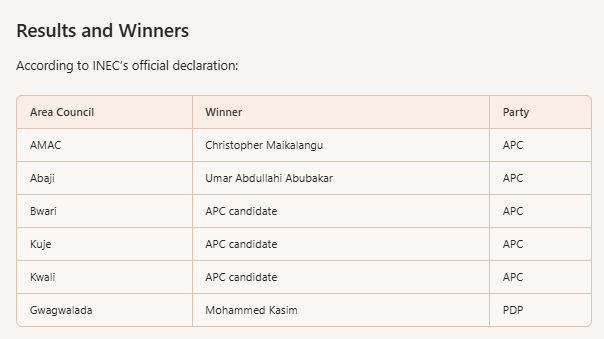
Thus, APC secured five of six chairmanships, consolidating its dominance in the FCT, while PDP’s lone victory in Gwagwalada provided a symbolic foothold.
Complaints and Praises
Complaints
- Voter Apathy: Many residents felt disconnected from local governance.
- Logistics: Delays in material distribution.
- BVAS Malfunctions: Technical glitches frustrated voters.
Praises
- Transparency: Uploading results to IReV was widely commended.
- Peaceful Conduct: Compared to past elections, violence was minimal.
- Inclusivity: Youth and women participation was notable.
An observer from the Commonwealth remarked: “The FCT elections demonstrate Nigeria’s capacity for credible local polls when transparency tools are properly deployed.”
Why Abuja’s LGA Elections Matter More
Unlike other states in Nigeria, the Federal Capital Territory does not have a governor or a state assembly to provide state-level leadership.
In this unique arrangement, the six Area Council chairmen stand as the highest elected officials in the capital, and their roles carry disproportionate importance.
Security coordination in rural councils is crucial because, in the absence of a governor or state assembly, the Area Council chairmen act as the primary elected authorities responsible for liaising with communities and federal security agencies.
They help organize local vigilance, report threats, and coordinate responses to rural insecurity that could spill toward the capital.
Relations with federal ministries and international missions fall to these chairmen because Abuja hosts Nigeria’s federal institutions and foreign embassies.
The chairmen serve as the local interface, ensuring that decisions on land use, community projects, and service delivery align with both national priorities and the expectations of international partners.
Thus, these elections are taken more seriously than LGA elections elsewhere because the Area Council chairmen are not overshadowed by governors or state assemblies.
They stand as the highest elected officials in Abuja, and their decisions directly affect the capital’s governance, security, and international reputation.
Implications for the 2027 General Elections
The 2026 FCT elections serve as a bellwether for national politics:
- APC’s dominance in five councils signals strong organizational capacity ahead of 2027.
- PDP’s win in Gwagwalada shows potential cracks in APC’s urban appeal.
- Youth apathy could foreshadow turnout challenges in 2027.
- INEC’s credibility in managing BVAS and IReV will be tested nationally.
Political analyst Jide Ojo told Daily Post: “The FCT council elections are a rehearsal for 2027. Whoever controls Abuja’s grassroots has symbolic legitimacy.”
Democratic Significance
Saturday’s elections in the FCT underscore both the progress and the challenges facing Nigeria’s democratic process.
On the one hand, they demonstrated real advances: the collation of results was transparent, the conduct of voting was largely peaceful, and the races themselves were competitive enough to give voters genuine, serious choices.
On the other hand, familiar challenges were still evident, including widespread voter apathy, reported vote-buying in some areas, logistical shortcomings in the distribution of materials on the part of the umpire, and low turnout of voters, seen as a fertile ground for election rigging.
Taken together, these reveal both promise and risk for Nigeria’s democracy.
The positive signal, however, is that Abuja’s elections show that credible local polls are possible and that transparency tools can strengthen public confidence.
But the warning signs are equally important: unless voter apathy is addressed and citizens are convinced that their participation matters, the legitimacy of these democratic exercises could gradually erode.
Civil society leader Ezenwa Nwagwu captured this tension when he observed, “Democracy is not only about presidential elections. It is about whether the people feel their votes matter at the grassroots.”
His words highlight the essential truth that the health of Nigeria’s democracy depends not only on national contests but also on the credibility and relevance of elections at the local level.
Conclusion
The February 21, 2026 FCT Area Council elections were more than local contests—they were signposts to Nigeria’s democratic journey and a preview of what is likely to occur in 2027.
With APC consolidating power and the opposition nearly nowhere in government, the elections show that the opposition has its job cut out for it.
But struggling with its internal leadership crisis amid treacherous lawsuits, is ten months enough for them to mount any serious challenge to the APC behemoth that is consolidating every day?
With the ruling party holding a whopping 31 out of 36 state governorships, while the remaining governors are split among PDP (3), Accord (1), APGA (1), and Labour Party (1), and with 72 out of 109 Senators and about 220 out of 360 members of the House of Representatives, the President Tinubu-led APC has near-total and perhaps inassailable control of Nigeria’s political structure.
Now, with FCT political power firmly on his side, a towering international standing, improving economic indices, and opposition parties almost in tatters, all things being equal, the 2027 general election appears all but concluded.
Rate, Like 👍, Comment 💬, Share this article, Follow us on our social media handles, and Submit your own story to get featured and earn rewards!
 WhatsApp Channel
 Telegram Channel