



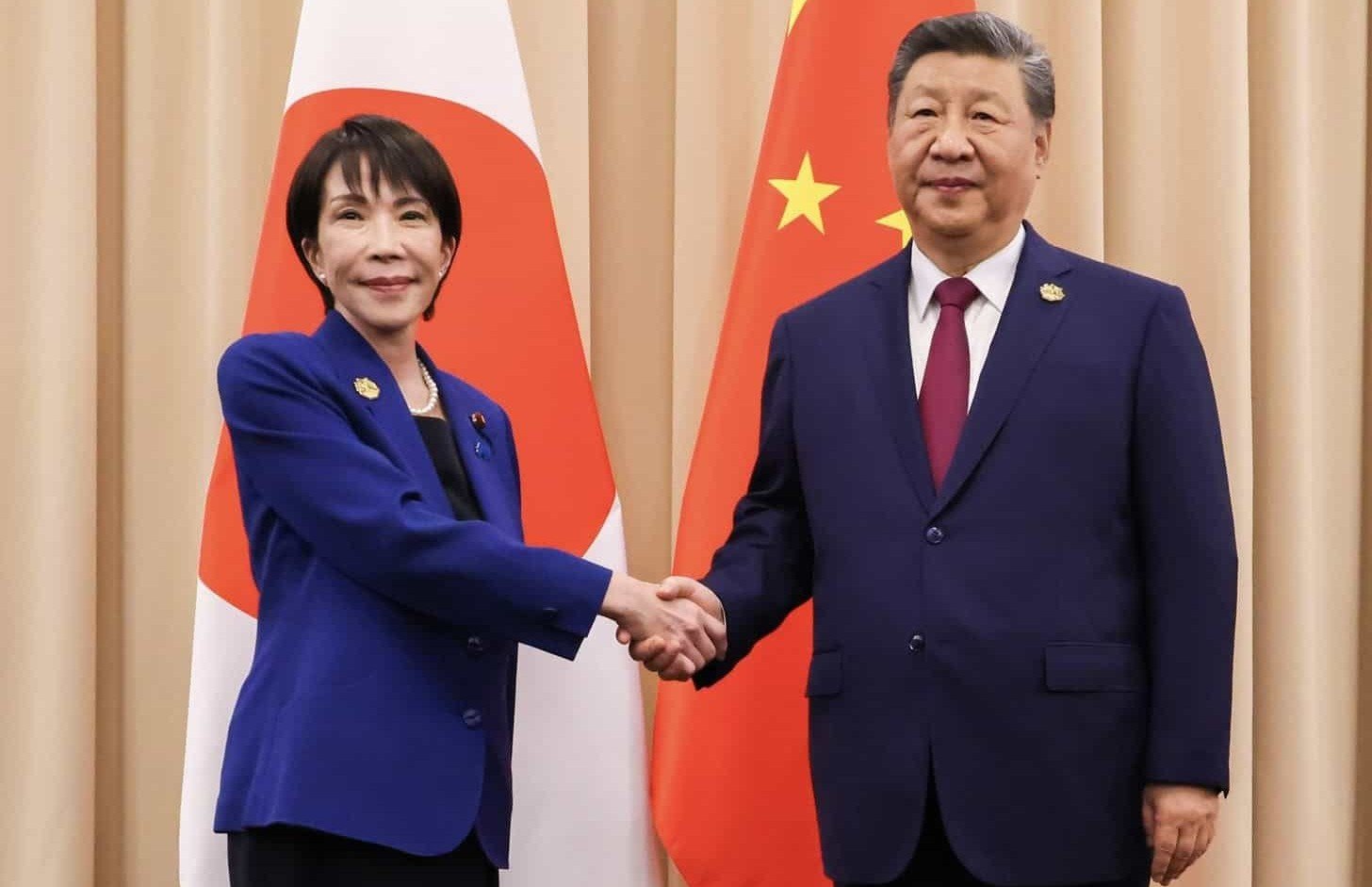
China has warned Japan over “reckless actions” following Prime Minister Sanae Takaichi’s recent landslide election victory.
The stern message underscores a deepening diplomatic crisis between Asia’s two largest economies, fueled by Japan’s increasingly assertive stance on Taiwan and a series of retaliatory measures from Beijing.
Prime Minister Takaichi, a known hawk on China, secured a resounding victory in Japan’s general election on February 8, 2026.
Her Liberal Democratic Party (LDP) and its coalition partner, the Japan Innovation Party, achieved a supermajority, capturing 352 out of 465 seats in the National Diet.
The electoral triumph grants Takaichi a robust mandate to pursue her policy agenda, which includes potential revisions to Japan’s pacifist constitution and a more confrontational approach towards Beijing.
The Taiwan Flashpoint
The current escalation traces back to November 7, 2025, when Prime Minister Takaichi declared in the Japanese parliament that a Chinese military intervention in Taiwan could constitute an “existential crisis for Japan.”
This statement implied Japan’s readiness to invoke its Legislation for Peace and Security, potentially allowing for collective self-defense operations in support of Taiwan.
China, which views Taiwan as an inalienable part of its territory, vehemently condemned Takaichi’s remarks as a grave interference in its internal affairs.
The diplomatic fallout intensified when Xue Jian, China’s Consul General in Osaka, posted a threatening message on social media platform X (formerly Twitter) directed at Takaichi.
Although the post was later deleted, China refused Japan’s demand for disciplinary action against Xue, instead calling for Takaichi to retract her statements.
In response to Japan’s hardening stance, Beijing has implemented a series of punitive measures.
China imposed a comprehensive ban on all Japanese seafood imports, expanding on previous restrictions related to the Fukushima wastewater release.
Effective January 6, 2026, China restricted the export of dual-use items and rare earth materials to Japan, a move particularly impactful for Japan’s advanced technology and defence sectors.
China also issued travel advisories for Japan and curtailed cultural exchange programmes, further limiting bilateral engagement.
Potential Military Flashpoints Now Emerging
Adding to the security concerns, a significant incident occurred in December 2025 when Chinese J-15 fighter jets reportedly locked their targeting radar onto Japanese F-15s.
This dangerous encounter prompted a diplomatic summons of China’s ambassador by Tokyo and drew criticism from the United States, which reaffirmed its commitment to Japan’s security.
Further symbolising the deteriorating relationship, the last two giant pandas in Japan, twins Xiao Xiao and Lei Lei, were returned to China in late January 2026.
This marked the first time in over 50 years that Japan has been without a giant panda, an event widely seen as the end of an era of “panda diplomacy” between the two nations.
Despite the escalating tensions, Prime Minister Takaichi has expressed a desire to maintain open dialogue with China.
However, her strong electoral mandate and unwavering commitment to national security suggest that significant concessions from Japan are improbable.
Takaichi’s efforts to revise Article 9 of the Japanese Constitution, which currently limits Japan’s military capabilities, could be a major point of contention in the near future.
The current trajectory indicates a continued period of strained relations, with both nations seemingly prepared to reduce economic interdependence.
The international community watches closely as the dynamic between these two regional powers reshapes the geopolitical landscape of Asia.
Rate, Like 👍, Comment 💬, Share this article, Follow us on our social media handles, and Submit your own story to get featured and earn rewards!
 WhatsApp Channel
 Telegram Channel







Oh to be in the era where world powerful states clash. World war 3 is really not far off. We just need a little push and everything would impale.