


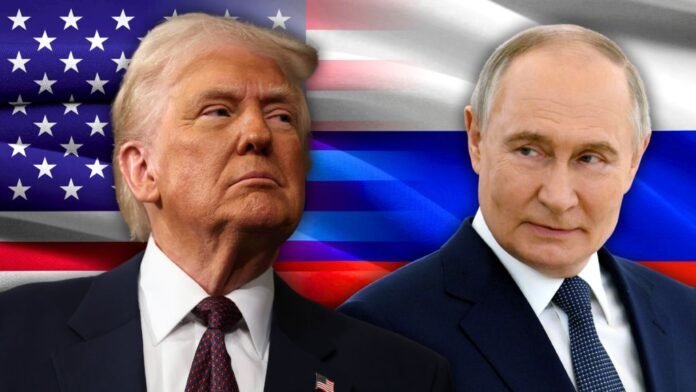
The New START treaty, the last major nuclear arms control agreement between the United States and Russia, has officially expired, leaving the world’s two largest nuclear powers without binding limits on their arsenals.
On Thursday, February 5, U.S. President Donald Trump rejected a proposal from Russian President Vladimir Putin to voluntarily extend the treaty’s limits for another year. Trump insisted that Washington is no longer interested in prolonging what he described as a flawed agreement.
In a post on his Truth Social platform, Trump wrote: “Rather than extend New START, which was badly negotiated by the United States and grossly violated, we should have our nuclear experts work on a new, improved and modernised treaty that can last long into the future.”
He argued that a fresh, comprehensive deal is needed to reflect current global realities, including the rise of China as a nuclear power.
Trump reiterated his desire for Beijing to be included in any future arms control agreement, though China has shown little interest in joining such negotiations.
Background on New START
The original Strategic Arms Reduction Treaty (START) was signed in 1991 between Washington and Moscow. New START was concluded in 2010 under former U.S. President Barack Obama and then Russian President Dmitry Medvedev.
The treaty capped the number of deployed strategic nuclear warheads at 1,550 for each country and limited delivery systems such as intercontinental ballistic missiles, submarine-launched missiles, and heavy bombers.
It was last extended in 2021 but has now lapsed, raising fears of a renewed arms race.
Putin had earlier indicated that Russia was willing to observe the treaty’s limits for another year if the United States agreed to do the same.
However, Washington declined the offer, despite reported discussions between U.S. and Russian officials on the sidelines of talks in Abu Dhabi over the war in Ukraine.
The Kremlin expressed regret over the treaty’s expiration. Spokesman Dmitry Peskov said Russia would continue to approach nuclear stability responsibly while prioritizing national interests.
Analysts warn that the collapse of New START could further weaken international efforts to limit the spread and use of nuclear weapons.
The absence of binding limits comes at a time of heightened geopolitical tensions, with conflicts involving nuclear-armed states adding to global instability.
The expiration of the treaty removes caps on the number of strategic nuclear warheads both countries can deploy, raising concerns about a new era of nuclear competition.
Rate, Like 👍, Comment 💬, Share this article, Follow us on our social media handles, and Submit your own story to get featured and earn rewards!





I actually support Trump on this, other able nuclear producing states should be included in the treaty. Also, it should be futuristic, hence the SALT 1&2, and START. But this gap right now is scary, as the analyst suggested, it might be the start of another Cold war. Difference will be it will be an even playing field, not just the then super powers Russia and US.
Nigeria, I hope you are ready, and have built your own nuclear weapon.