


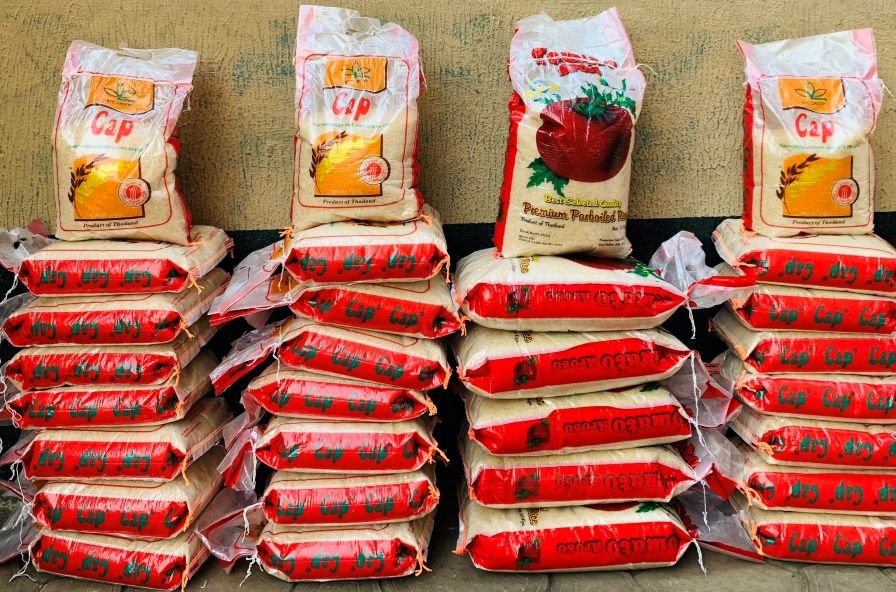
A Federal Government–backed agribusiness policy committee has recommended shutting Nigeria’s rice import windows, citing easing food inflation and concerns that the country’s rice surplus is being driven by imports rather than domestic production.
The proposal followed revelations that Nigeria spent more than ₦1 trillion importing about 2.4 million metric tonnes of rice in 2025, draining foreign exchange reserves.
Based on global benchmark prices, the imports were valued between $832 million and $888 million, equivalent to roughly ₦1.18 trillion to ₦1.26 trillion at prevailing exchange rates.
The recommendation was contained in the communiqué of the Second Cycle Meeting of the National Agribusiness Policy Mechanism, held in Abuja in December 2025.
The committee noted that food inflation had dropped below 14%, a sharp decline from the conditions that previously justified opening import windows when inflation exceeded 40%.
While Nigeria recorded a technically positive food balance across major staples by December 2025, the committee warned that rice and wheat supply remain heavily import-dependent, exposing structural weaknesses in local production.
Import-Driven Surplus
Data presented at the meeting showed that Nigeria produced 6.07 million metric tonnes of rice in 2025. However, imports of 2.4 million metric tonnes created an import-driven surplus of about 1.1 million metric tonnes.
Field surveys revealed that rice farmers faced declining profitability after import windows were opened. Falling market prices combined with rising production costs led to negative margins, forcing some farmers to reduce output or switch to other crops.
The committee advised closing rice import windows to protect local farmers and strengthen productivity. It also recommended introducing price-stabilisation mechanisms to shield producers from volatility.
“Continued imports could deepen job losses, weaken local mills, and threaten Nigeria’s long-term food security,” the communiqué warned.
The committee stressed that Nigeria’s reliance on imports undermines the sustainability of its agribusiness sector and risks discouraging investment in local rice production.
The recommendation aligns with President Bola Tinubu’s broader push for food security, which has been a central policy priority since his declaration of a nationwide security and economic emergency in late 2025.
Officials believe that closing import windows will encourage domestic production, reduce foreign exchange outflows, and strengthen Nigeria’s agricultural base.
Rate, Like 👍, Comment 💬, Share this article, Follow us on our social media handles, and Submit your own story to get featured and earn rewards!
 WhatsApp Channel
 Telegram Channel