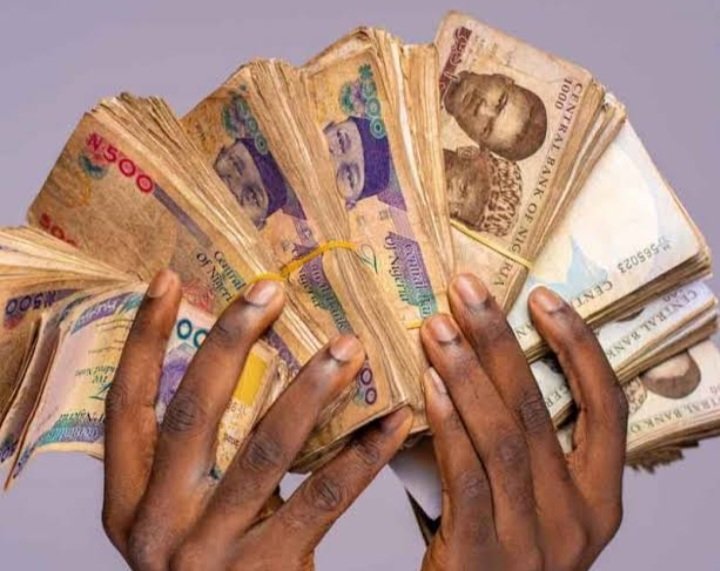


Nigeria’s external reserves have risen to $46.01 billion, the highest level since March 2018, strengthening the country’s foreign exchange buffers amid ongoing macroeconomic reforms.
According to the Central Bank of Nigeria’s (CBN) Movement in Reserves report, reserves stood at $46.01 billion as of January 22, 2026. This marks a $406.25 million or 1.12% increase from $45.5 billion at the close of 2025.
The reserves had already rebounded strongly in 2025, rising by $4.62 billion or 11.3% from $40.88 billion in 2024, despite volatility in the global crude oil market.
Oil Prices and Forex Earnings
Data from the Organisation of Petroleum Exporting Countries (OPEC) showed crude oil prices at $63.21 per barrel as of January 22, 2026, up from $61.01 at the end of 2025. The figure is slightly below Nigeria’s 2026 budget benchmark of $64–$64.85 per barrel.
Crude oil remains Nigeria’s dominant source of foreign exchange, accounting for about 90% of forex earnings. Analysts say the steady rise in reserves reflects improved crude oil output, enhanced macroeconomic stability, and rising inflows from autonomous sources.
Other factors include external borrowings by the federal government and reduced fuel imports following domestic refining improvements, which have eased pressure on the forex market.
Vice Chairman of Highcap Securities Limited, David Adnori, said: “Our oil output has improved significantly, and crude oil and gas continue to dominate foreign exchange earnings. We now have a much better-managed NNPCL, with greater transparency in the system.”
He added that investor confidence, driven by reforms, has boosted inflows from autonomous sources.
Banks’ Credit to Private Sector Falls
Meanwhile, banks’ credit to Nigeria’s private sector fell by 2.8% year-on-year to ₦75.8 trillion in 2025, down from ₦78.02 trillion in 2024.
CBN data showed that private sector credit peaked at ₦78.07 trillion in April 2025 before dropping to ₦74.4 trillion in October, reflecting tight monetary conditions.
The decline was attributed to high interest rates, inflation, and global economic uncertainty.
In 2025, the CBN maintained a hawkish stance to stabilise the naira and curb inflation. Between February and July, the Monetary Policy Committee (MPC) held the Monetary Policy Rate (MPR) at 27.50%. In September, it cut the rate slightly to 27.00%, the first reduction since 2020, but kept it unchanged through year-end.
Despite the contraction, analysts remain optimistic about recovery in 2026. They expect clearer monetary policy direction and improving macroeconomic conditions to support lending.
Analysts at Cordros Capital said: “We believe the reinforcement of the CBN’s limit on Deposit Money Banks’ loans-to-deposits macro-prudential ratio will continue to drive banks’ willingness to create risky assets over the short to medium term.”
A CBN study also concluded that credit remains growth-enhancing, even in environments with tight monetary policy, poor investment climate, and infrastructure deficits.
Presidency Takes Praise
Reacting to these developments, the Special Adviser to President Bola Tinubu on Policy Communication, Daniel Bwala, said the good news that Nigeria’s external reserves have now crossed $46 billion, the highest level in eight years, should be celebrated.
Bwala made this statement in a post on his official X handle on Sunday.
Claiming that Nigerians ought to be happy with the current All Progressives Congress, APC-led administration, Bwala noted that the increased reserve will help the country meet all its obligations.
He explained that the development “strengthens our economy, improves our ability to support the naira, helps meet international obligations, and builds investor confidence.
“President Bola Ahmed Tinubu remains focused on serious economic rebuilding. The reforms may be tough, but they are delivering measurable results.
“Step by step, Nigeria is regaining financial strength and global credibility. The work continues. The results are showing.”
Rate, Like 👍, Comment 💬, Share this article, Follow us on our social media handles, and Submit your own story to get featured and earn rewards!
 WhatsApp Channel
 Telegram Channel