

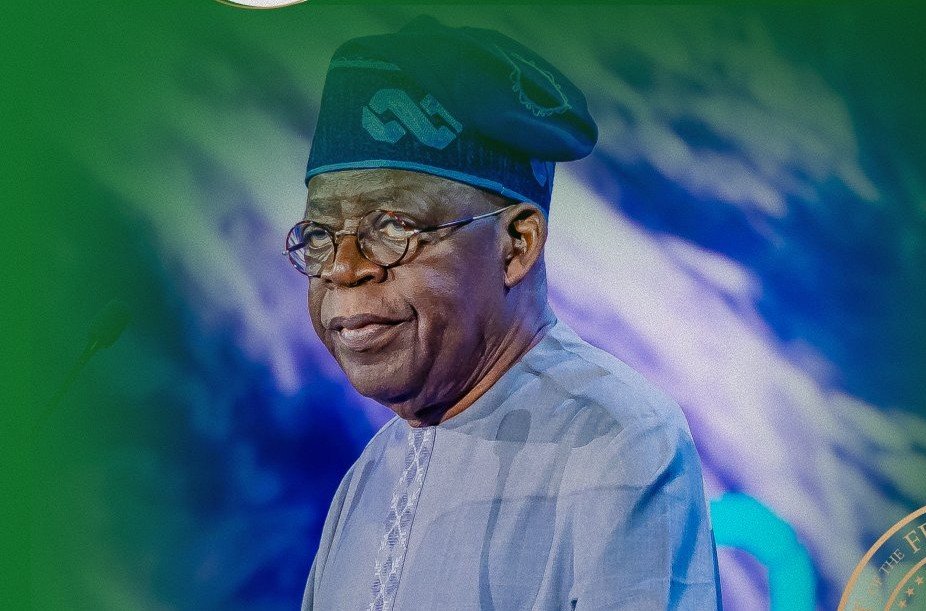
President Bola Tinubu has declared that Nigeria is open to welcoming foreign investors capable of unlocking over $30 billion in green energy financing annually.
The president spoke on Tuesday while attending the 2026 Abu Dhabi Sustainability Week (ADSW) in the United Arab Emirates, an event focused on global climate action, innovation, and sustainable development.
Tinubu said Nigeria possesses vast climate and natural assets that remain largely untapped and could deliver mutual economic, energy, health, and food security benefits to both the country and the global community.
The Nigerian leader is attending the summit at the invitation of UAE President Sheikh Mohamed bin Zayed Al Nahyan, alongside global policymakers, investors, and development partners.
Addressing participants on the theme “The Nexus of Next: All Systems Go,” Tinubu said Nigeria is pursuing an integrated approach that aligns climate action with economic growth, energy access, and job creation.
“Nigeria has launched a climate and green industrialisation investment framework to unlock between $20 billion and $30 billion annually in climate finance,” the president said.
He disclosed that Nigeria has strengthened its climate governance through the adoption of the National Carbon Market Activation Policy (NCMAP) and the launch of a National Carbon Registry, both designed to enhance emissions reporting, verification, and investor confidence.
“These measures ensure transparency and credibility in our carbon markets,” Tinubu noted.
He added that the World Bank is currently implementing a $715 million climate action project in Nigeria, aimed at expanding clean electricity access to more than 17.5 million citizens nationwide.
“Sustainability demands that policy, finance, infrastructure, technology, and human capital move together,” he said.
Electricity reforms and technology-driven transition
Tinubu described electricity as the foundation of any modern economy, stressing that Nigeria is pursuing energy transition reforms without undermining industrialisation.
“The Electricity Act 2023 now provides for decentralised and inclusive energy systems,” he said.
According to the president, the reform enables sustainable electricity delivery to rural communities, off-grid health facilities, schools, markets, and underserved populations.
He said Nigeria is actively seeking partnerships that support technology transfer, innovation, and artificial intelligence deployment to improve efficiency and modernise energy infrastructure.
“The adoption of artificial intelligence to optimise efficiency is no longer a future concept. It is a present necessity,” Tinubu stated.
The president also revealed that Nigeria’s climate investment platform targets $500 million for climate-resilient infrastructure, while a national platform aims to mobilise $2 billion in capital.
He added that a $50 billion sub-regional green bond issued in 2025 attracted $91 billion in subscriptions, signalling strong investor confidence.
Nigeria, UAE to co-host Investopia in Lagos
On the sidelines of ADSW, Tinubu announced that Nigeria will co-host Investopia with the UAE in Lagos in February.
The initiative is designed to attract global investors and accelerate sustainable investment flows into Africa’s largest economy.
“Investopia will bring together investors, innovators, policymakers, and business leaders to transform opportunities into commitments and ideas into investments,” Tinubu said.
He confirmed that Nigeria and the UAE also concluded a Comprehensive Economic Partnership Agreement (CEPA) during the summit.
The agreement was signed in the presence of President Tinubu, Sheikh Mohamed bin Zayed Al Nahyan, Nigeria’s Minister of Industry, Trade and Investment Dr Jumoke Oduwole, and UAE Minister of Foreign Trade Dr Thani bin Ahmed Al Zeyoudi.
Tinubu described CEPA as “a historic and strategic agreement” that will deepen cooperation in renewable energy, aviation, infrastructure, logistics, agriculture, and digital trade.
Tariff-free access for over 7,000 Nigerian products
Explaining the economic impact of the agreement, Trade Minister Jumoke Oduwole said the UAE will eliminate tariffs on more than 7,000 Nigerian export products.
She said agricultural and industrial goods such as fish, seafood, oil seeds, cereals, cotton, pharmaceuticals, and chemicals will now enter the UAE market duty-free.
“Over the next three to five years, the UAE will also eliminate tariffs on Nigerian machinery, vehicles, electrical equipment, apparel, and furniture,” Oduwole said.
She added that Nigerian exporters now have a clear pathway into one of the world’s most dynamic trade hubs.
The agreement also allows Nigerian businesses to establish subsidiaries and branches in the UAE, while business visitors can stay up to 90 days within a 12-month period to explore opportunities.
Nigeria commits to tariff reforms and investor protections
Oduwole said Nigeria will eliminate tariffs on about 6,000 imported products, with 60% removed immediately and the rest phased over five years.
She clarified that Nigeria’s Import Prohibition List remains unchanged.
“These imports are concentrated in industrial inputs, capital goods, and machinery that strengthen Nigeria’s productive capacity,” she said.
Nigeria’s commitments under CEPA cover 99 services across 10 sectors, including business services, transport, finance, construction, health, tourism, and communication.
She described CEPA as “a strategic instrument for economic transformation” that positions Nigeria as a gateway to the African Continental Free Trade Area (AfCFTA) market of 1.4 billion people.
Rate, Like 👍, Comment 💬, Share this article, Follow us on our social media handles, and Submit your own story to get featured and earn rewards!
 WhatsApp Channel
 Telegram Channel