


Starting today, Monday January 5, the United Kingdom will enforce new regulations banning daytime television and online advertisements for foods high in fat, salt, or sugar. Officials describe the measure as a “world‑leading action” to tackle childhood obesity.
The health ministry projects the ban could eliminate up to 7.2 billion calories from children’s diets annually.
It estimates the policy will reduce obesity among 20,000 children and generate about £2 billion ($2.7 billion) in health benefits.
“By limiting advertisements for junk food before 9 PM and prohibiting paid ads online, we can reduce excessive exposure to unhealthy food options,” Health Minister Ashley Dalton said.
He added that the initiative is part of a broader NHS strategy to prioritise prevention alongside treatment.
The ban follows other government actions, including an expanded sugar tax on products such as milkshakes, ready‑to‑drink coffees, and sweetened yoghurt drinks. Local councils have also been empowered to block fast‑food outlets from opening near schools.
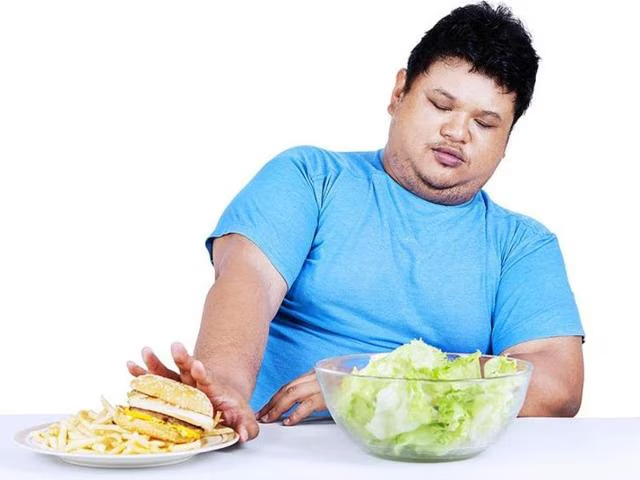
Officials argue that advertising strongly influences children’s eating habits, shaping preferences early and increasing risks of obesity and related health problems.
Government data shows 22% of children starting primary school in England are overweight or obese. By secondary school age, that figure rises to more than one‑third.
Tooth decay remains the leading cause of hospital admissions among children aged 5 to 9 in the UK.
The charity Diabetes UK welcomed the ban. Its chief executive, Colette Marshall, warned of rising cases of type 2 diabetes among young people.
“This is a vital step in protecting children’s health and reducing long‑term risks,” she said.
The UK government insists the new rules will help reshape food culture and reduce long‑term health costs.
Rate, Like 👍, Comment 💬, Share this article, Follow us on our social media handles, and Submit your own story to get featured and earn rewards!
 WhatsApp Channel
 Telegram Channel