

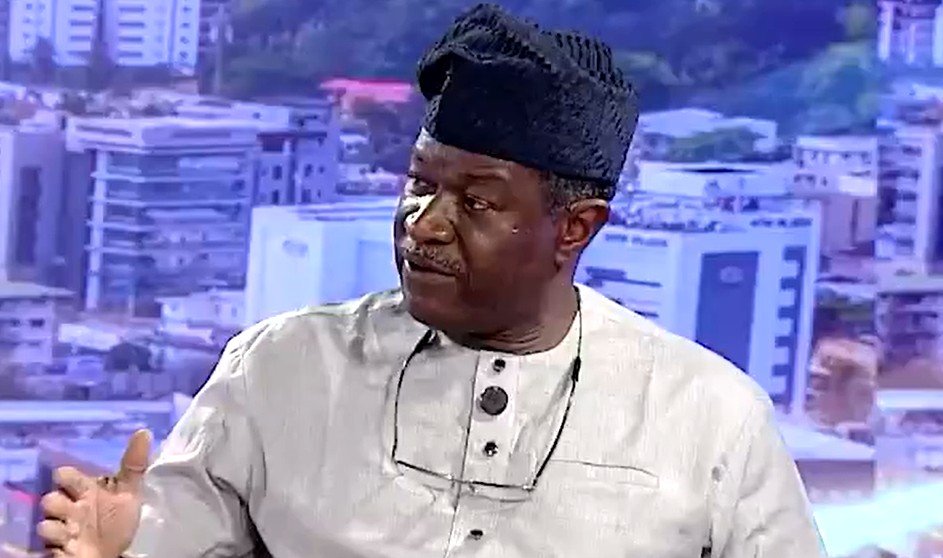
Managing Director of the National Education Loan Fund (NELFUND), Akintunde Sawyerr, has described Nigeria’s student loan scheme as a temporary intervention aimed at widening access to tertiary education amid limited resources.
He said planned amendments will eventually extend benefits to all Nigerian students, including those in private institutions.
Speaking in an interview with ARISE NEWS, Sawyerr explained that the current structure reflects Nigeria’s demographic realities and fiscal constraints.
With over 70 percent of the country’s 230 million people under 35, he noted that many young Nigerians are unable to pursue higher education due to financial barriers.
“The exclusion is a temporal thing in my view. Once we’ve been able to cover those who really need it, then we’ll look at those in private institutions,” he said.
Public universities remain the initial focus of the scheme, as they serve the majority of low-income households.
Sawyerr acknowledged, however, that private institutions have played a critical role in sustaining education during years of strikes and underfunding in the public sector.
Neutral Access, Interest-Free Loans, and Future Reforms
Sawyerr emphasized that the loan application process is politically neutral and fully automated through the portal www.nelf.gov.ng, which does not request party affiliation, ethnicity, or regional identity.
He added that President Bola Tinubu’s long-term vision is for all Nigerian students to benefit once resources allow, with amendments to the law expected in the future.
The loans are interest-free, with repayment beginning only two years after completion of the National Youth Service Corps (NYSC) programme.
Tuition payments are made directly to institutions, while stipends go to students, leaving electronic trails monitored by the ICPC and EFCC.
Sawyerr acknowledged challenges such as higher medical school fees and additional barriers faced by students with disabilities, noting that NELFUND is engaging institutions and exploring inclusive support mechanisms.
He stressed that the scheme is designed to address Nigeria’s skills gap, enabling more young people to gain education and become employable.
“We don’t have a mandate to create jobs, but we do have the mandate to give people the opportunity to be ready for jobs,” he said.
Rate, Like 👍, Comment 💬, Share this article, Follow us on our social media handles, and Submit your own story to get featured and earn rewards!
 WhatsApp Channel
 Telegram Channel