





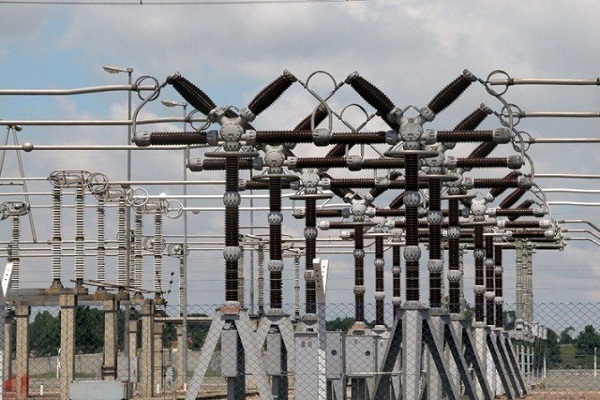
Electricity supply is expected to improve in parts of Lagos after the commissioning of two upgraded transmission substations with an additional 208 megawatts (MW) of bulk transmission capacity.
The projects in Ijora and Apapa Road are expected to increase the amount of electricity available for distribution to homes, businesses and industrial users in some of the state’s busiest commercial areas.
At Ijora, two new 100-megavolt-ampere (MVA) transformers increased the substation’s capacity from 90MVA to 230MVA.
The upgrade represents an additional 112MW of transmission capacity.
At Apapa Road, a new Gas Insulated Substation (GIS) added 96MW to the transmission network.
A GIS uses compact, enclosed equipment to control and protect high-voltage electricity circuits. It generally requires less space and can offer greater protection from environmental exposure than conventional outdoor equipment.
Apapa Facility Replaces Stopgap
The Apapa Road project replaced an outdoor transformer that had served as a temporary solution after the original facility, commissioned in 1985, was decommissioned.
Speaking at the commissioning, Minister of Power Joseph Tegbe said the projects responded to years of transmission constraints and ageing infrastructure.
He linked the investment to the Federal Government’s plan to build a one-trillion-dollar economy.
Tegbe described President Bola Ahmed Tinubu as showing “fearless commitment to addressing the structural constraints that have held our economy back.”
The minister also commended Lagos State Governor Babajide Sanwo-Olu for supporting the projects.
TCN Explains Expected Benefits
The Managing Director and Chief Executive Officer of the Transmission Company of Nigeria (TCN), Sule Ahmed Abdulaziz, said the Apapa facility now had a capacity of 180MVA.
He said the installation and energisation of two new 60MVA transformers and modern gas-insulated switchgear had tripled the substation’s capacity from 60MVA.
The Ijora facility now has a capacity of 230MVA, according to Abdulaziz.
The additional bulk power will be available to the Eko Electricity Distribution Company (EKEDC) for onward distribution to Apapa Causeway, Ijora, Amukoko, Ajegunle, Apapa Wharf and Tin Can Island.
The project is expected to support electricity supply to commercial, industrial and port-related activities in the areas.
Projects Receive International Support
The Ijora and Apapa projects were sponsored by the Japan International Cooperation Agency (JICA) and the World Bank, respectively, in partnership with the TCN.
Abdulaziz described the projects as evidence of the Federal Government’s plan to modernise the transmission network and improve the stability of the national grid.
The national grid is the interconnected system used to transmit electricity from power stations to distribution companies across Nigeria.
Tegbe said the ministry would continue to strengthen transmission infrastructure across the country.
He said this would help reduce the gap between available electricity generation and the amount of power the national grid can transmit to distribution companies.
Officials Attend Commissioning
The commissioning ceremonies were attended by senior officials from Nigeria, Japan, Lagos State and the power sector.
They included Japan’s Ambassador to Nigeria, Hideo Suzuki, who was represented by his deputy, and JICA Nigeria’s Chief Representative, Ishigame Keiji.
The Permanent Secretary of the Ministry of Power, the Chief Executive Officer of the Nigerian Independent System Operator (NISO), directors and ministerial aides were also present.
Representatives of the Lagos State Government, EKEDC and Ikeja Electricity Distribution Company (IKEDC) attended the event.
The upgrades are expected to strengthen power transmission in Lagos, although improved supply to consumers will also depend on electricity generation, distribution networks and local operating conditions.

 WhatsApp Channel
 Telegram Channel