


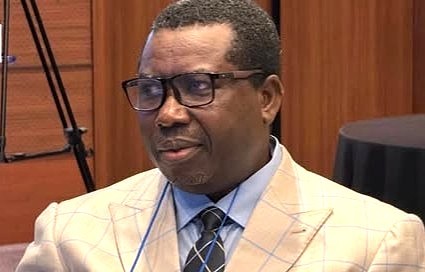
Independent National Electoral Commission (INEC) Chairman Joash Amupitan has called for constitutional and electoral law changes to fund the commission directly from the Federation Account, arguing this would guarantee its independence.
Amupitan made the appeal while delivering a keynote address in Abuja at the public presentation of Shadows: Protest Essays on Africa’s Most Consequential Country (1999-2023), written by THISDAY Newspapers Managing Director Eniola Bello.
His speech, titled “Strengthening Electoral Institutions: Pathways to Free, Fair, and Peaceful Elections in 2027,” also called for amending the Electoral Act so that candidate nominations are concluded a full year before general elections.
INEC Chief Wants Funding Tied to Federation Account
Amupitan said the commission’s current “first-line charge” status, guaranteed under Section 81(3) of the Nigerian constitution, is not enough to fix its funding problems.
That provision allows INEC’s budget to be released directly from the Consolidated Revenue Fund, ahead of other government spending.
However, INEC still has to pass through the National Assembly’s normal appropriation process, meaning another agency effectively decides what the commission receives.
“So long as INEC is subject to the processes of appropriation, having to go to the National Assembly… it is very difficult to operate in such a situation,” Amupitan said.
He therefore proposed making INEC part of the Federation Account, the pool of national revenue shared monthly between federal, state and local governments, so it can operate without waiting on yearly budget approval.
In addition, Amupitan criticised the state of internal democracy within political parties, saying opaque or imposed primaries are often the root of election disputes and court cases.
He said parties strengthen democracy when they hold transparent primaries and let members genuinely choose their candidates.
Shettima Cites Economic Gains, Praises Book’s Message
Vice President Kashim Shettima, represented by his Special Adviser on General Duties, Aliyu Modibbo, said democracy grows when governments listen to dissent rather than treat it as hostility.
He said the removal of the petrol subsidy and the unification of the foreign exchange system were difficult but necessary decisions taken to address economic problems that had been delayed for years.
Citing recent figures, Shettima said Nigeria’s economy grew 3.89% in the first quarter of 2026, following 3.4% growth in 2024, while oil production has recovered to about 1.5 million barrels per day.
He added that debt servicing had fallen from 96% to below 65% of government revenue, and that the 2026 budget allocates ₦26.08 trillion to capital projects, including the Lagos-Calabar Coastal Highway and the Sokoto-Badagry Superhighway.
“These figures do not mean that all hardship has disappeared, but they show that the economy is finding firmer ground,” Shettima said.
Chairman of the occasion and former Katsina State Governor Aminu Masari described the book as a valuable record of Nigeria’s democratic journey over the past 25 years, useful to policymakers, scholars and students alike.
United Nigeria Airlines Chairman Obiora Okonkwo, representing Air Peace's Allen Onyema, and reviewer Professor Okey Ikechukwu also praised Bello’s work, calling it a detailed and accessible account of the events that shaped the country since 1999.
The event drew politicians and prominent figures from Nigeria’s public and private sectors, along with academics and media professionals.

 WhatsApp Channel
 Telegram Channel


The INEC chairman saying what he is saying, what is the grounding evidence that with direct funding they would improve?? You talk about independency, but even with what you have now, you still do not grant full duties.
Concerning the vice president words, I have no doubt with these figures of improvement, problem is, when does the grassroots feel the improvement?? The poverty line is invincible, there is no such a thing anymore, people are dying, do you know the present conditions have made corruption seem as a lucrative business idea, look at The Billionaire Kidnapper.