

President Bola Tinubu’s naira-for-crude policy has shielded Nigeria from the worst of the global fuel crisis.
The Presidency said the policy ensured steady fuel supply despite disruptions linked to the Middle East conflict.
The position was outlined by Temitope Ajayi in a statement released on Thursday.
“The policy has insulated Nigeria from the worst effects of the ongoing global energy disruptions,” Ajayi said.
He explained that the initiative began in July 2024 and took effect from October 1 of the same year.
“It guarantees a steady domestic fuel supply through local refining and naira-denominated crude transactions,” he added.
The policy allows crude sales in naira to domestic refiners, reducing exposure to foreign exchange volatility.
Meanwhile, the approach centres on the partnership between the Nigerian National Petroleum Company Limited and the Dangote Refinery.
Global Crisis Tests Nigeria’s Energy Strategy
Ajayi said the global crisis has entered its sixth week, disrupting oil flows and driving price increases.
“The closure of the Strait of Hormuz has triggered widespread shortages across global markets,” he said.
The Strait is a major route for global oil and gas shipments.

Countries across Asia, Europe, and North America have introduced emergency energy controls.
“Several nations have reduced workdays, enforced early business closures, and introduced fuel rationing,” he said.
However, Nigeria has avoided widespread scarcity and long fuel queues during the same period.
“Nigeria has maintained steady availability of petroleum products with no widespread queues reported,” Ajayi said.
He linked this stability to increased domestic refining capacity.
“Local refining and currency-based crude supply have strengthened Nigeria’s energy security,” he added.
According to Bloomberg, global fuel markets remain volatile amid the conflict.
Dangote Refinery Drives Local Supply Stability
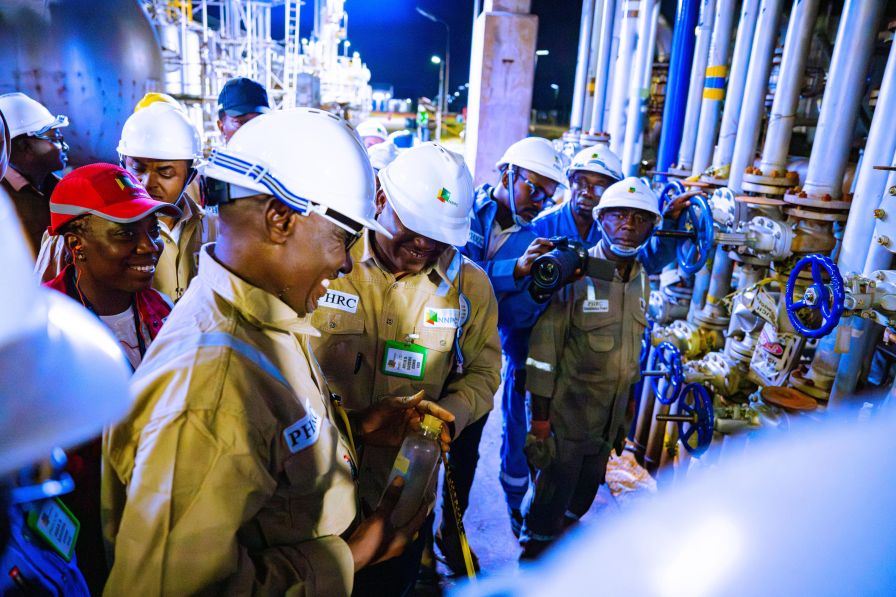
Central to the policy’s success is the Dangote Refinery in Lekki, Lagos.
The refinery has scaled up output to meet domestic fuel demand and support exports.
“Despite global supply disruptions, Nigeria has avoided scarcity due to strategic local refining,” Ajayi said.
He said the refinery prioritised local consumption over export opportunities.
“It has ensured consistent fuel availability nationwide despite higher global prices,” he added.
Ajayi disclosed that Nigeria has begun exporting refined products to African markets.
“Last month alone, nearly 500,000 tonnes of refined products were exported,” he said.
The policy has also reduced reliance on imported fuel and offshore storage costs.
“It has strengthened economic resilience and preserved foreign exchange,” he said.
Furthermore, the initiative aligns with efforts to boost industrial growth and job creation.
“The refinery stands as a cornerstone of Nigeria’s energy sovereignty,” Ajayi said.
As global uncertainty continues, Nigeria’s strategy appears to offer a buffer against external shocks.
Rate, Like 👍, Comment 💬, Share this article, Follow us on our social media handles, and Submit your own story to get featured and earn rewards!
 WhatsApp Channel
 Telegram Channel